

When Matthew Guy walked away from engineering in his early 20s, he wasn’t planning a career in real estate. He was searching for something more meaningful.
“I wanted to go make a difference,” he said, recalling the year spent as a missionary to orphans in Turkey and several more working as a youth pastor in the States earning just $40,000 a year.
But over time, he grew burned out on nonprofit bureaucracy and began looking for a more sustainable path — one that would allow him to provide for his family while still contributing in a meaningful way.
“My goal was to build a passive income portfolio that would eventually only take 15 hours a week to manage,” he said, “and then use the rest of my time to make an impact where I felt called.”
What began as an experiment evolved into something more. Over the past decade, Guy has helped bring 55 distressed Baltimore homes back to life, while building a rental portfolio of 18 properties that now supports his family and gives him the freedom to focus on broader impact.
A One-Year Bet That Paid Off
After leaving the nonprofit world, Guy told his wife he needed just one year to see whether real estate investing would work.
“If it works, great. If not, I’ll go back to being an engineer in a cubicle like I was 10 years ago,” he said.
The year was more than enough.
He began buying vacant, deteriorated row houses throughout Baltimore, many sourced through online bank-owned (REO) auctions. Purchase prices were often between $16,000 and $60,000 — reflecting the deep distress and long-term vacancy in many neighborhoods.
No Renovation Shortcuts
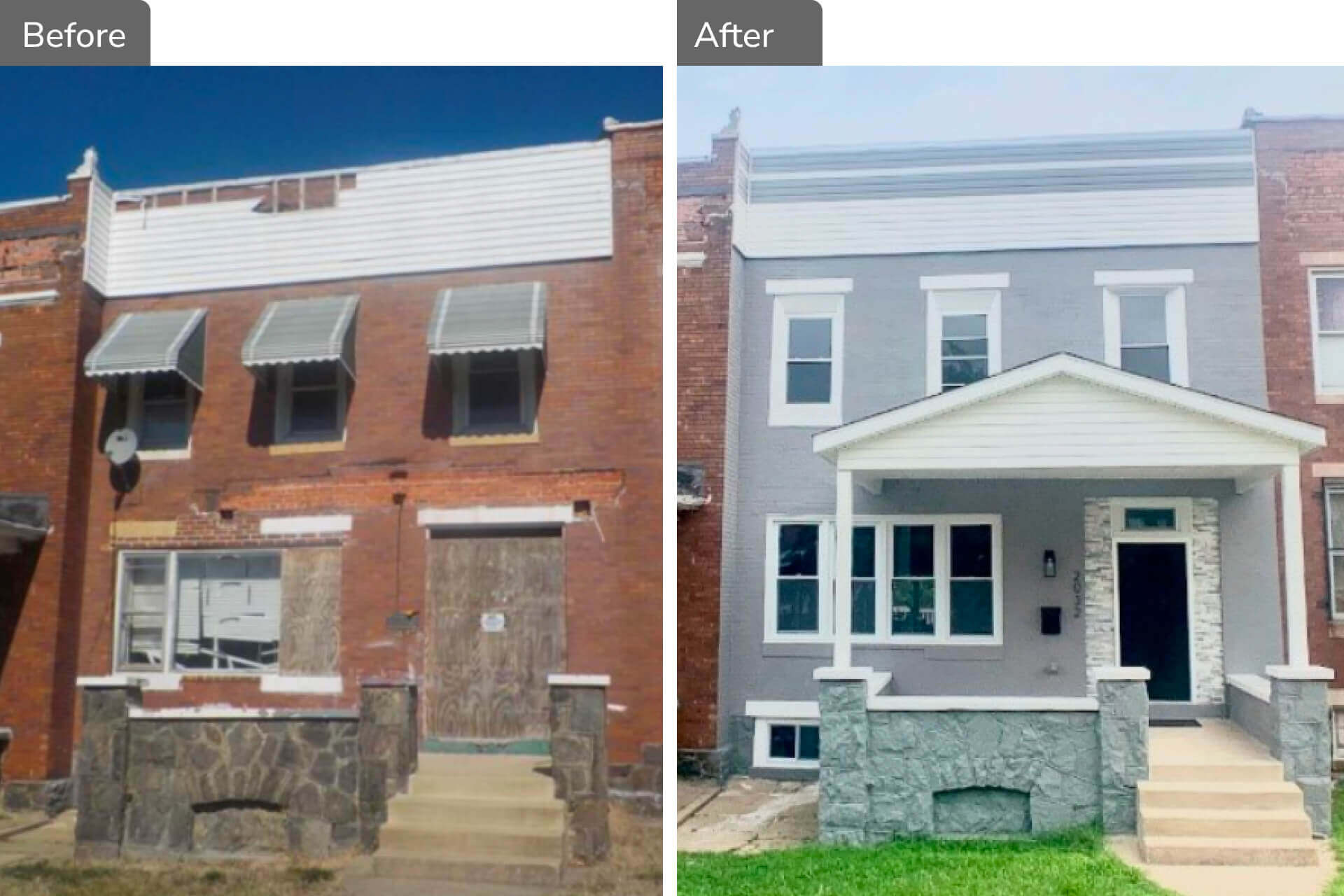
Guy deliberately pursued homes others avoided, targeting “the worst house on the block” with the goal of transforming it into “the nicest house on the block.”
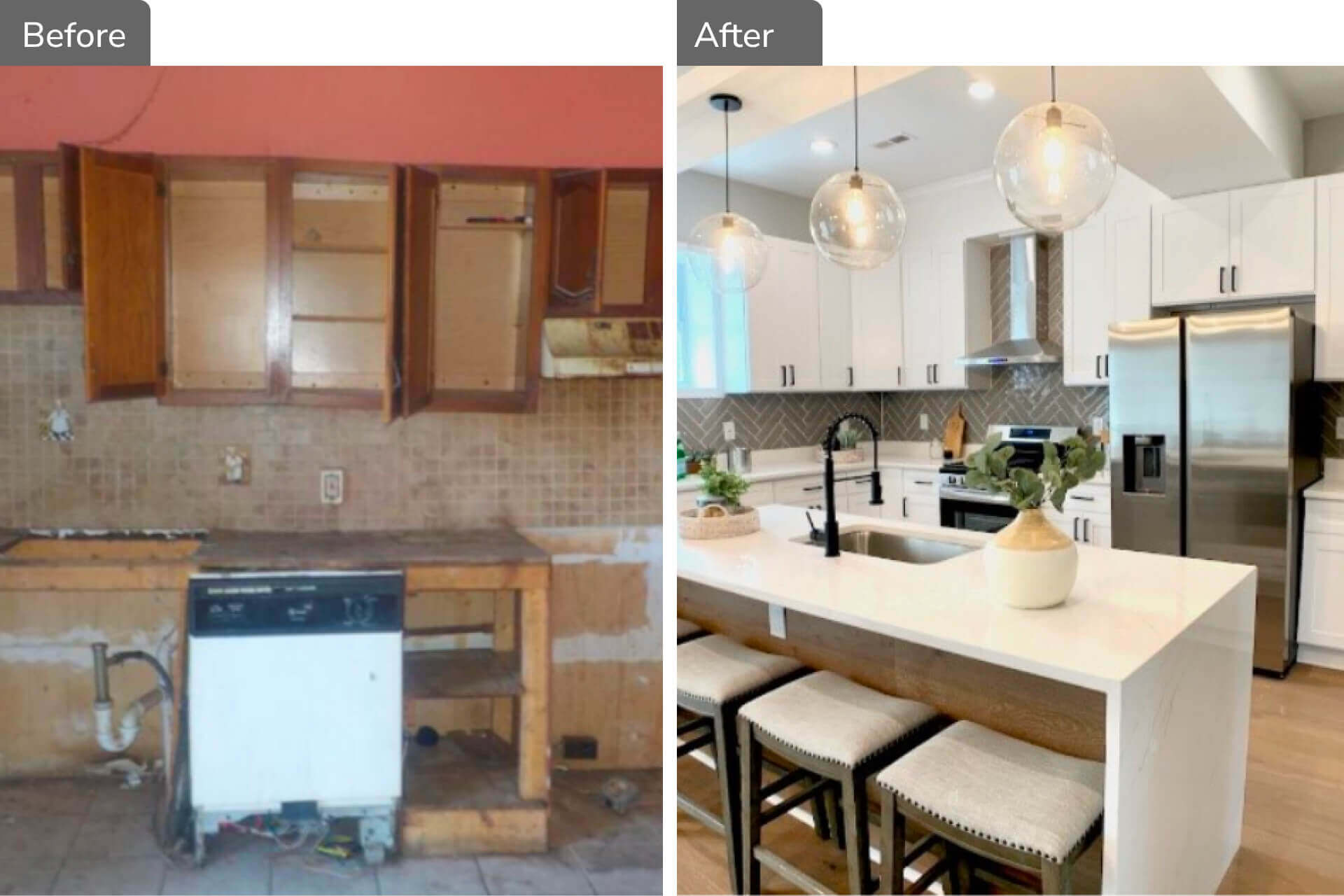
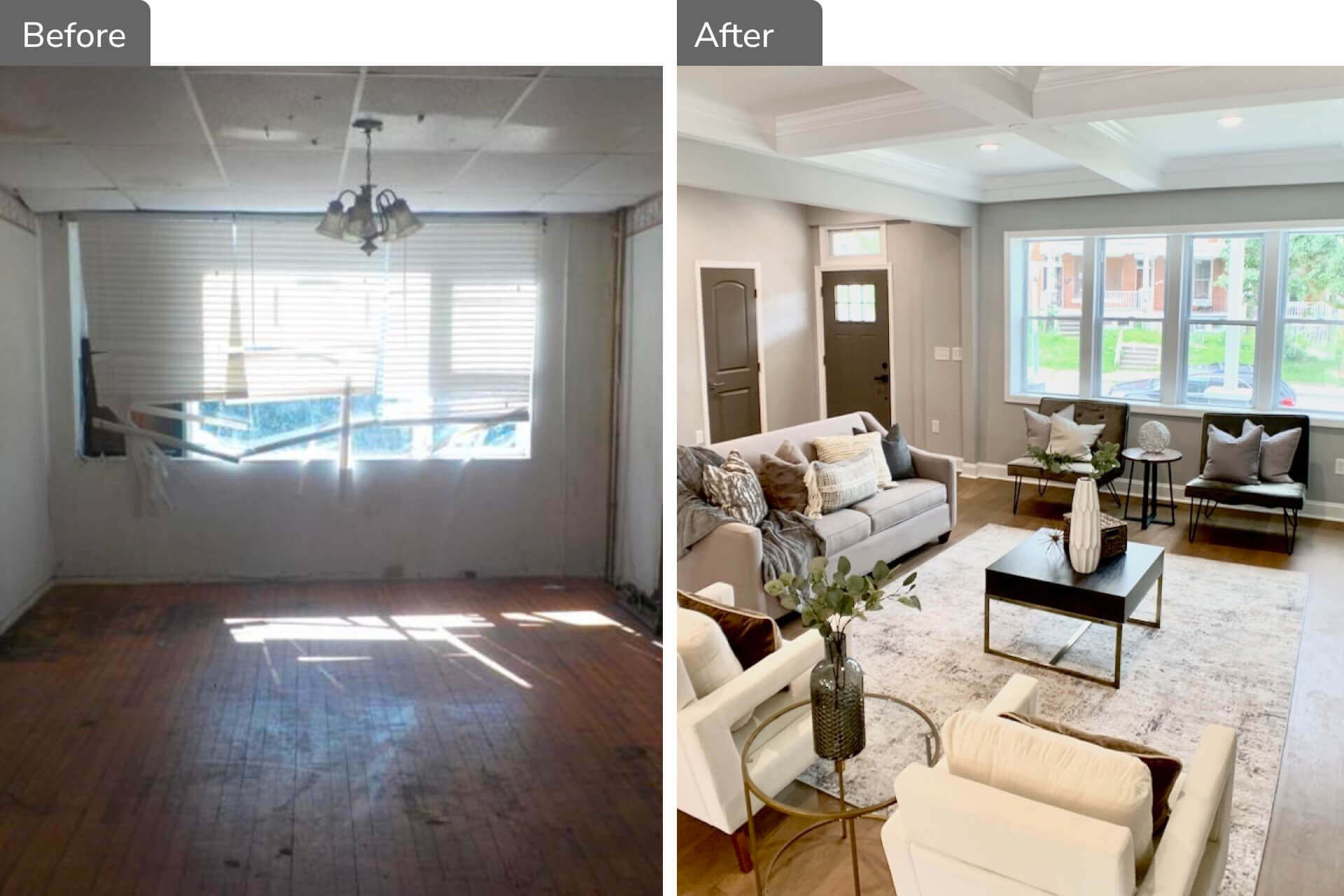
His rehabs were full gut renovations.
“It’s all new electric, plumbing, kitchens, everything … we’re basically creating a new house,” he said.
A typical deal might involve purchasing a property for $50,000, investing $100,000 into renovations, and selling it for around $200,000.
But for Guy, the work wasn’t just about margins.
“If something wasn’t done right, we’d go back and fix it,” he said.
Most homes sold to first-time buyers at accessible price points — often between $160,000 and $240,000 — offering move-in-ready options for young families who’ve saved up for their first home or were priced out of nearby markets like Washington, D.C.
The transformation often extended beyond the property itself.
“When you take a boarded-up house and turn it into the nicest one on the block, it changes how people feel about where they live,” he said. “Neighbors come by, they’re excited — it creates momentum.”
Auctions as an Acquisition Engine
Auction.com became a key part of Guy’s acquisition strategy.
“You guys were the best single source of finding houses for me in Baltimore City,” he said.
Between 2016 and 2022, Guy purchased 16 properties through online REO auctions. Public record data shows that half have since been resold — and all of those are now owner-occupied.
“I liked buying bank-owned properties because it was straightforward,” he said. “There’s no gray area — you’re just buying directly from the bank.”
The Best Landlord They’ve Had
While most properties were resold, Guy retained a portion as long-term rentals. Today, he owns 18 rental units, primarily three- and four-bedroom row houses renting for $1,500 to $1,800 per month.
For rentals, his philosophy remained consistent.
“My goal was to be all-in, purchase and renovation, for under $100,000,” he said.
Many of his tenants are working-class families, and most are actually single mothers. Guy aims to provide not just housing, but stability.
“I tell my tenants I want to be the best landlord they’ve ever had,” he said. “I want them to stay long-term.”
At the same time, he’s realistic about the work it requires managing these rentals.
“It’s not completely passive,” he said. “It’s high-touch. But it matters.”
Hope City Homes
Baltimore’s estimated 13,000 vacant homes represent both a challenge and an opportunity.
Guy approaches his work strategically — focusing his resale projects on blocks with fewer vacancies, while using rentals to serve neighborhoods with strong demand for affordable housing.
Working in these communities has shaped his perspective.
“Baltimore gets a bad reputation,” he said. “But there are good people here who care about their neighborhoods. When you improve the physical environment, it creates ripple effects.”
His company, Hope City Homes, reflects that vision.
The name traces back to a church he once hoped to start.
“I realized church planting wasn’t the path for me,” he said. “But I still wanted to bring hope to the city — just in a different way.
“I call it Hope City Homes for two reasons,” he continued. “One is when you’re helping the city out by fixing up abandoned row houses, you’re bringing hope to the neighborhoods. And then also all my buyers were first-time homeowners. So, it’s kind of a new start for them.”
Amplifying His Impact
After reaching financial independence, Guy began exploring how to use those other free 25 hours a week of his time more intentionally.
“I tried writing. I tried volunteering,” he said. “But I kept coming back to where my unique skills and strengths lie.”
That realization led him back to real estate — but with a broader lens.
Through partnerships with nonprofits and city-backed programs, Guy is now helping fund the redevelopment of distressed housing in situations where traditional investors wouldn’t participate.
“My goal is to help create housing for people in the 60 to 80 percent AMI (Area Median Income) range — teachers, firefighters, working-class families,” he said. “And to help bridge the gap with things like closing costs, which are often the biggest barrier.”
For Guy, the work is no longer just about properties — it’s about people.
“You start to realize it’s not just about fixing a house,” he said. “It’s about creating a better environment for someone to live, raise their kids, and build a life.”
Looking back, he’s proud of what’s been accomplished — but even more focused on what’s ahead.
“There’s still so much need,” he said. “And I feel like I’m just getting started.”